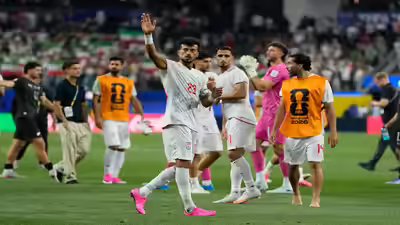
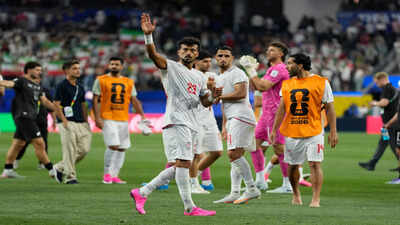
Washington: Iran’s national football team managed to draw 2-2 against New Zealand in Los Angeles in a brilliant display of football resilience. This was a remarkable feat, considering the squad was operating under a logistical travel program apparently designed by Franz Kafka and implemented by the Department of Homeland Security. Iran is not alone in its grievances. A dark cloud of institutional cynicism hangs over the tournament. Several visiting teams, including Uruguay and Senegal, have complained about heavy-handed policing, repressive and intrusive security measures, and restrictive practices that make players feel less like elite athletes and more like high-priced prisoners.
‘The World Cup is a disaster for us, we don’t want to make excuses, it’s not a fair competition’
Applause for Iran’s persistence had barely faded before Team Melli’s players found themselves in a different mess entirely: a frantic scramble at the airport.Iran’s head coach, Amir Ghalinoi, did not mince words after the match, revealing that instead of spending the night recovering in LA, his squad was instructed to board a flight to their base camp in Tijuana, Mexico, shortly after the final whistle. “They didn’t even give us time to recover,” he said. Today after the game they asked us to leave immediately. Striker Mehdi Tarini expressed regret. “The World Cup is a disaster for us. We don’t want to make excuses, but it’s not a fair competition.”
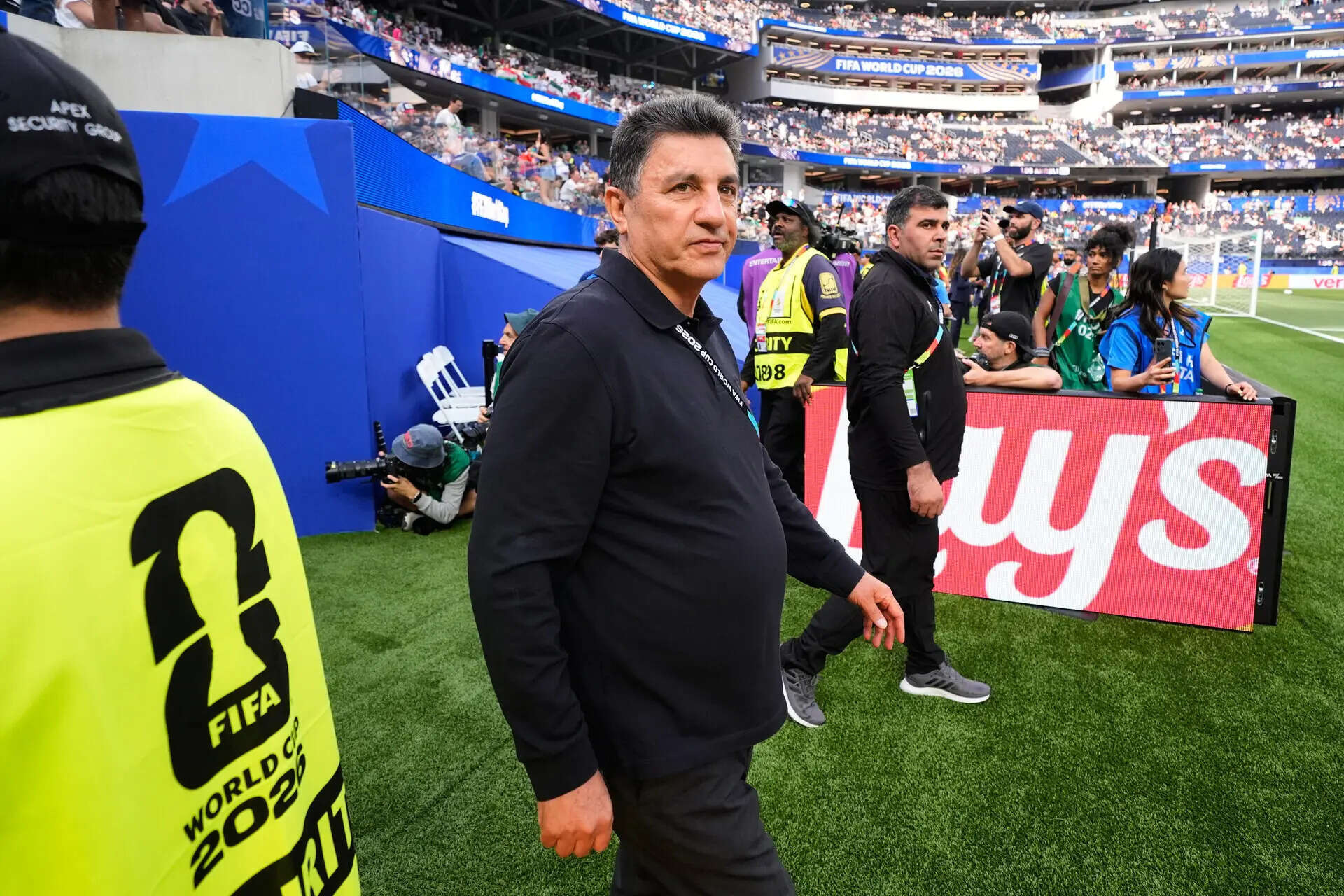
Iran’s head coach Amir Gholnoi. (AP Photo)
At most World Cups, footballers cool down with ice baths and tactical briefings. Iran’s recovery program apparently involves tracking passports, removing belts for security checks, and wondering if their carry-ons exceed the weight allowance. Someone joked that the pregame warm-up didn’t consist of tactical drills or hamstring stretches, but rather a three-hour seminar on how to maintain composure while scrutinizing the biometric data of U.S. agents. The sheer psychological strain of navigating US immigration twice in 24 hours made a high-pressure defensive line from New Zealand look like a routine stroll on Sunday.Yet if the journey was tiring, the match itself was fascinating. Played in LA, home to one of the largest Persian populations in the world, the game unfolded against a politically charged backdrop. Some Iranian supporters waved the pre-revolutionary lion and sun flag associated with opponents of the current regime. Others unreservedly supported Team Melee.There were reports of flags being confiscated, fans sewing various pieces of the banned symbol inside the stadium and emotional clashes in the stands. Iran’s national anthem was met with both jeers and jeers at the start of the game.In a striking irony, this match took place shortly after the US and Iran emerged from direct military conflict. Yet on American soil, Iranians freely criticized their own government, monarchists waved banned signs with unusual dexterity, and the Iranian team itself, transcending politics, won the affection of tens of thousands of spectators.
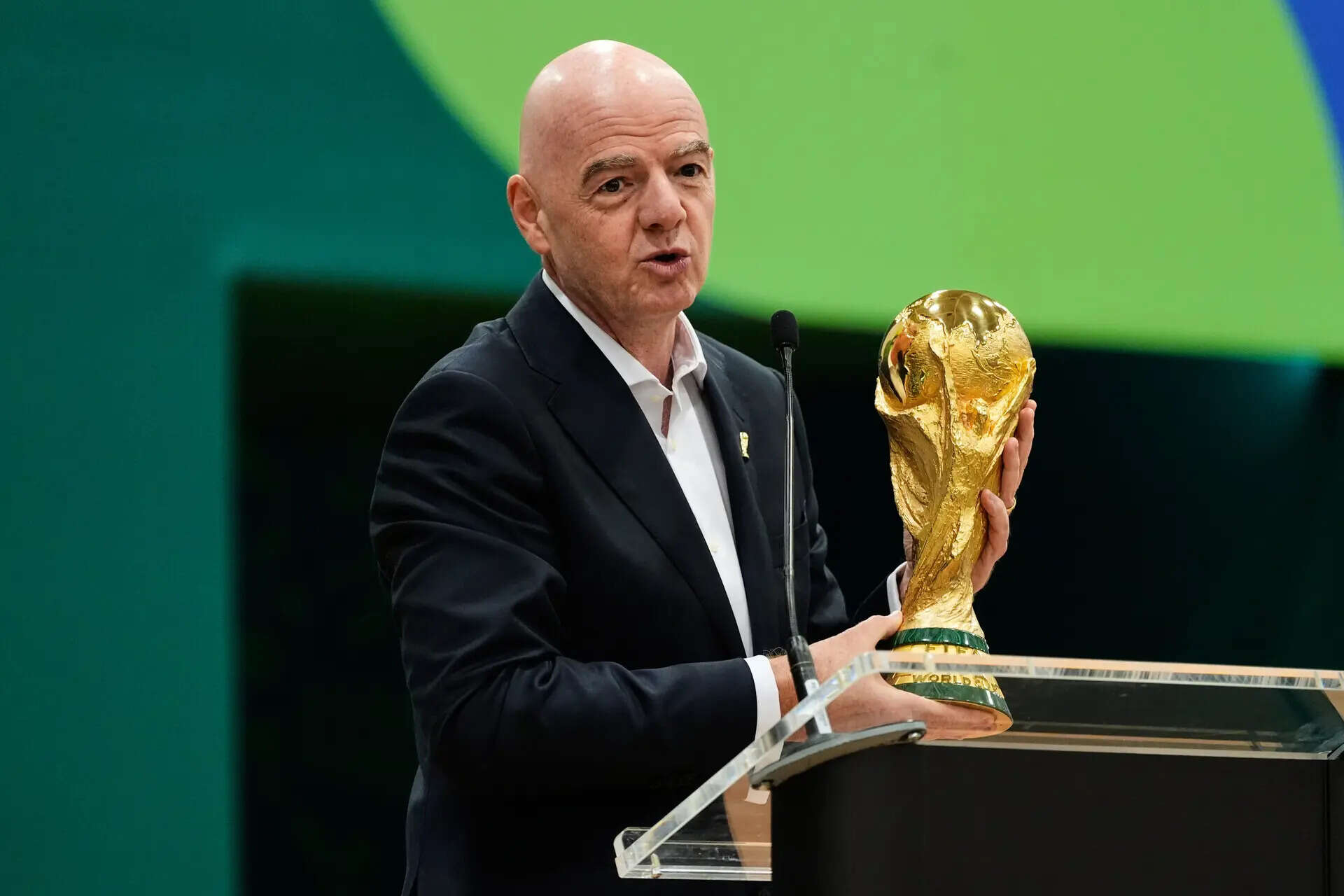
FIFA President Gianni Infantino (AP Photo)
FIFA president Gianni Infantino, a Trump ally, visited Iran’s dressing room after the game to offer words of comfort and encouragement. He told the players that you are writing history and the whole world is watching you. “You are stronger than anything.” Kind words, though the players would have preferred confirmation that they could spend the night in Los Angeles.Unsurprisingly, the Iranian delegation reserved its highest praise not for FIFA or Washington, but for Mexico. Team officials praised the Mexican government for their protection and accommodation, its hospitality in stark contrast to the U.S., which has been accused of acting less like a festival host and more like a crazed bouncer at an exclusive nightclub.Several other teams have been on the receiving end. Videos have circulated showing Senegalese players being individually searched upon arrival in the U.S., prompting accusations online of discrimination against European teams. This bureaucratic inefficiency culminated when a Somali referee, officially appointed by FIFA to officiate the matches, was flatly refused entry to the United States and sent back on the next available flight. Last heard, he was blowing the political whistle in Mogadishu.This grim, fortress-like impression is exacerbated by the empty seats in many famous stadiums. American organizers, misjudging public enthusiasm and a growing capitalist system, set ticket prices beyond the reach of ordinary working fans. FIFA promises a festival of global unity. At times it resembles a special Broadway production where cheap seats in some countries cost more than a month’s wages.