[ad_1]
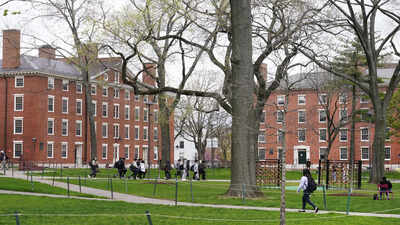
Harvard University’s Faculty of Arts and Sciences (FAS) has postponed a highly anticipated vote on a controversial proposal to limit A grades, citing the need for extended faculty debate. According to The Harvard Crimson , the proposal — designed to address grade inflation at Harvard College — was initially scheduled to be voted on by email after Tuesday’s faculty meeting. However, FAS Dean Hopi E. Hoekstra delayed the vote until the final faculty meeting in May due to lengthy faculty comments.
Split votes and important amendments
During the meeting, more than 200 faculty members approved several amendments and decided to split the final vote into three separate sections. These include:
- About 20% cap on A grades.
- A percentage-based ranking system for internal awards.
- A three-tier grading system—satisfactory plus, satisfactory, and unsatisfactory—for courses that choose to opt out of the cap.
The amendments clarify that the A-grade cap will apply to all undergraduates enrolled in the course, not just those taking it for a letter grade. This is a departure from the earlier version of the proposal. Courses opting out of the cap will now follow a more nuanced three-tier grading system, rather than the simple SAT/UNSAT option initially proposed.By splitting the vote into separate sections, the faculty effectively killed the original proposal, which had been presented as an integrated system in February. Nevertheless, government professor Elisha C. Holland, who is one of the drafters of the proposal, emphasized that the A-grade cap remains the central principle, with the percentage ranking acting as a complementary measure. Faculty will now have the flexibility to adopt individual elements of the proposal or reject them entirely.
Student opposition and faculty concerns
The proposal has faced widespread criticism from students since its release. A Harvard Undergraduate Association poll in February found that about 85% of respondents opposed the A-grade cap. Despite this opposition, David J. Deming, dean of Harvard College, noted that many students understood the underlying concern of grade inflation, even if they themselves were hesitant about the proposal.Faculty members raised a number of questions during the meeting, ranging from how the cap would affect language courses to the statistical reasoning behind the 20% limit. Some also debated the utility of introducing a “satisfactory plus” designation for courses that fall outside the cap. These debates reflect the complex balancing act between maintaining rigorous academic standards and ensuring fair assessment of student performance.
Timeline and Implementation
If approved, the proposal would be officially implemented in the fall of 2027, a year late from the initial timeline. Despite this extended timeline, Deming previously indicated that faculty would be encouraged to implement the caps as soon as this fall.Before the meeting, Amanda Claybaugh, dean of undergraduate education, asked department directors to send a frequently asked questions document to ensure an informed vote. In an email to directors of undergraduate studies, Claybaugh emphasized the importance of careful consideration, calling the proposal “the most consequential case we’ve had in some time.”The postponement means faculty will have extra time to weigh the potential impact of the proposal, which supporters see as a necessary reform to curb grade inflation, while critics warn it could affect academic freedom and student motivation.
What’s next?
As the debate continues, it is unclear how the faculty will ultimately vote. With the decision now split into separate components, Harvard College faculty face a complex choice: approve the A-grade cap, percentile-based award system, and new grading scale individually, or reject some or all of the measures. The end result will have significant implications for ranking policies and academic culture at one of the world’s leading universities.
[ad_2]
Source link