[ad_1]
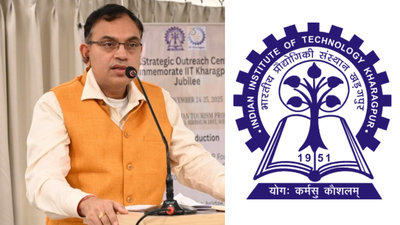
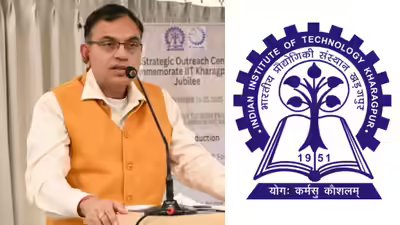
When Suman Chakraborty took over as Director of the Indian Institute of Technology Kharagpur in 2025, it marked the end of a distinguished academic journey built on excellence, innovation and purpose. Yet, its story is not simply told by executive leadership. Long before taking charge of one of India’s premier institutions, Chakraborty had established himself as a scientist committed to using engineering to solve the nation’s most pressing healthcare challenges.Over the past two decades, he has quietly led a movement that takes cutting-edge science out of elite laboratories and into villages, primary health centers and low-resource settings—where affordability often determines access to life-saving diagnostics.
Academic excellence and early achievement
A native of West Bengal, Chakraborty’s educational trajectory reflected consistent distinction from the start. He obtained his B.Tech in Mechanical Engineering from Jadavpur University in 1996, standing second in his class. This solid grasp of fundamental engineering concepts led to national attention when he topped the All India GATE exam the following year.He pursued higher studies at the Indian Institute of Science, one of India’s largest research institutes. There, he completed both his ME and PhD, graduating as a Gold Medalist and receiving a Senate Commendation for Academic Excellence. His doctoral research was widely recognized, winning the Best Thesis Award at IISc and the Best International CFD Thesis Award at a global competition, an early indication of his depth in computational fluid dynamics and interdisciplinary research.Chakraborty started his career as an Assistant Professor at IIT Kharagpur in the year 2002. Contrary to the trend of others seeking academic globalization, Dr. Chakraborty chose to stay put, creating an ecosystem. In the year 2008, Dr. Chakraborty attained the rank of full professor. In addition, Dr. Chakraborty has published more than 500 research papers in reputed journals, received more than 25 patents, and mentored more than 50 research scholars, thereby contributing to the Indian scientific manpower pool.
Converting to science Affordable health care
Chakraborty’s impact on society came, more than his teaching, from his practical application of science. His work in microfluidics, the study of fluids at the microscopic scale, makes medical diagnostics accessible to low-resource settings.Chakraborty established one of the first benchmark microfluidics labs globally at IIT Kharagpur. The research done in this lab is not just theoretical but has applications in the field of health care.One of his most notable innovations is paper-and-pencil microfluidics, a breakthrough that enables diagnostic tests to be performed on simple paper strips. By exploiting the fundamental principles of fluid dynamics and capillary action, these tests eliminate the need for expensive equipment, electricity, or trained technicians.This innovation has produced a blood testing kit that costs less than ₹2 per test, significantly reducing the cost barrier for routine diagnostics. In a country where millions of people still struggle to access basic healthcare services, such affordability has far-reaching implications.Additionally, Chakraborty and his team have developed a handheld device capable of detecting oral cancer quickly, which may allow early diagnosis in areas where modern screening facilities are not available. These technologies are specifically designed for scalability and accessibility, targeting populations that are often excluded from traditional healthcare systems.
Indigenous innovation during COVID-19
Chakraborty’s approach to research gained further visibility during the COVID-19 pandemic, when rapid, affordable testing became a global priority. He led the development of COVIRAP, a local rapid molecular diagnostic test designed to provide accurate results faster and at a lower cost than conventional RT-PCR methods.This innovation highlighted the importance of self-reliance in critical health care technologies and demonstrated how academic research institutions can effectively respond to national emergencies. COVIRAP not only contributed to India’s pandemic response, but also strengthened the capacity of frugal engineering to address large-scale public health challenges.
Awards, recognition, and research impact
Chakraborty has received several prestigious awards for his contributions to engineering and applied science. He was awarded the Shantiswaroop Bhatnagar Prize in 2013, one of India’s highest honors for scientific research. In 2022, he was also awarded the Infosys Prize, cementing his position as an innovator in his field.It is also clear that he has left an impact in terms of the volume and importance of his work, including hundreds of publications and patents that have the potential to revolutionize grassroots health care delivery.
Beyond the Topics: Science-Led Social Approaches
As Director of IIT Kharagpur, Chakraborty now plays a key role in shaping the future of one of India’s most prestigious institutions. However, his broader legacy lies in redefining how science can serve society.In a world where scientific research is increasingly driven by high levels of innovation and competition, Chakraborty’s work provides a paradigm shift, focusing on accessibility, comprehensiveness, and practical impact. His innovations prove that it is possible to explain and apply complex scientific concepts through simple, low-cost tools that can in turn have a profound impact on people’s lives.Chakraborty’s work and career have been driven by the philosophy that the ultimate goal of science is not just to publish, but to solve problems and improve people’s lives. Through his work, Suman Chakraborty not only advanced the field of engineering, but also brought the benefits of this advancement to those who needed it most.
[ad_2]
Source link