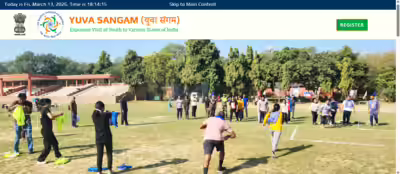
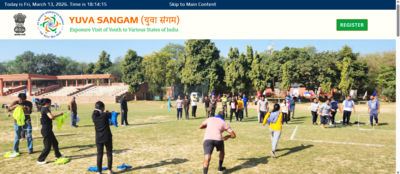
University Grants Commission (UGC) has urged youth across the country to apply for Yuva Sangam Phase 6, a youth exchange program organized under the Ek Bharat Shreshtha Bharat (EBSB) initiative.In a recent post on X, the commission encouraged students and young professionals to register for the program and participate in educational and cultural tours to different parts of India.According to the Ministry of Education (MoE), Yuva Sangam is a youth exchange program initiated by the Department of Higher Education (DHE), Government of India. The initiative aims to help the youth to learn about the culture, traditions and development journey of different states and Union Territories.The program also focuses on building strong ties between the youth and promoting the idea of ”unity in diversity” through organized exchange visits between the paired states and Union Territories.
Who can apply for Yuva Sangam Phase 6?
According to the Ministry of Education, the following candidates are eligible to apply:
- Youth between 18 to 30 years
- Students of Higher Education Institutions (HEIs).
- National Service Scheme (NSS) volunteers
- Volunteers of Nehru Yuva Kendra Sanghathan (NYKS).
- Young professionals
How to Apply
Eligible candidates can apply online through official portals: ebsb.aicte-india.org and ekbharat.gov.in. Applicants must register using their APAAR ID. Last date to apply is 18 March 2026, 11:59 PM.
What will selected participants get?
According to the Ministry of Education, the selected participants will be part of educational and cultural tours lasting five to seven days. Travel days will not be included in the tour duration.Participants will visit paired states or union territories and interact with local communities to understand their culture and development practices.These tours will be hosted by 22 identified higher education institutions across India.
State and HEI tie-up for Yuva Sangam Phase 6
Below is the list of paired States/UTs and Higher Education Institutions for Phase VI.
Full participation in previous stages
Since the launch of Yuva Sangam, more than 6,000 youth and coordinators have already participated in the programme, the ministry said.Over 46,000 registrations were received in the previous phase of the program, which showed strong interest among the youth. ANI Reports
Yuva Sangam Phase 6 Themes
The program focuses on five key themes, often referred to as the “5 Ps”:
- Pariyatan: Tourism
- Parampara: Traditions and Culture
- Pragati: Development and Governance.
- Paraspar Sampark: People-to-People Connections
- Prodigy: Technology and Innovation
Through these themes, participants have the opportunity to see how different regions of the country work, learn about local traditions and understand technological and social developments.
How is the program implemented?
Yuva Sangam follows a “whole of government” approach. This initiative has been implemented in collaboration with Central Ministries and Departments, State Governments, Nodal Higher Education Institutions.This integrated system helps organize visits, manage travel and ensure meaningful learning experiences for participants.The program also supports the goals of the National Education Policy (NEP) 2020, which encourages experiential learning and cultural understanding among students.