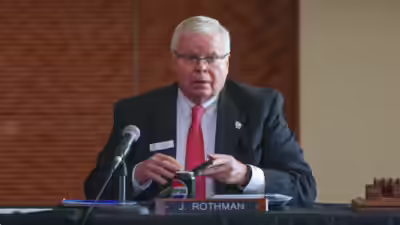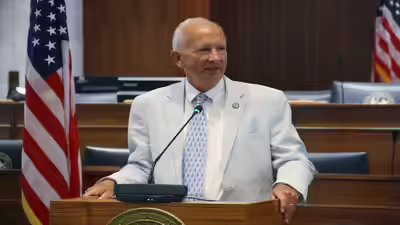
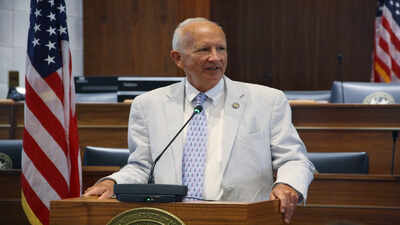
The North Carolina Supreme Court on Thursday rejected a long-running legal battle over public school funding, a decision that leaves spending power with the state legislature rather than the courts.In a 4-3 decision led by Republican justices, the court set aside its 2022 ruling that allowed a trial judge to direct taxpayer funds to address education disparities across the state.Chief Justice Paul Newby wrote that the case had gone beyond its original scope. What started as a funding dispute in one county, he said, became a broader challenge to the state’s entire education system enacted by the General Assembly. He added that once the case is extended, the jurisdiction of the trial court no longer applies.
The funding plan is no longer binding.
The decision effectively ends the court supervision that is tied to a multi-year treatment plan. A trial court previously determined that the state needed $678 million to meet obligations over two years of an eight-year education improvement plan. The plan aims to increase teacher pay, expand access to pre-kindergarten, and support students with disabilities.According to Associated Pressthe ruling means lawmakers don’t have to follow the plan when drafting the state budget. The Republican-controlled General Assembly is currently working on a deferred spending proposal.
Political reaction divided
Democratic Gov. Josh Stein said the court ignored precedent. “The Supreme Court simply ignored the precedent it established, enabling the General Assembly to deprive another generation of North Carolina students of the education promised by our Constitution,” Stein said in a statement. A.P ReportsAssociate Justice Anita Earls, one of the concurring judges, said the ruling undermines the enforcement of constitutional rights. Writing in dissent, he said allowing the state to avoid judicial review could reduce constitutional guarantees to “words on paper.” A.P.Republican Senate Leader Phil Berger supported the decision. In a statement, Berger said policy decisions should rest with elected lawmakers and not be imposed through court action.
The background of The Leandro case
The case, known as Leandro, began in 1994 when families and school districts in low-income areas sued the state. They argued that North Carolina was failing to provide adequate education in accordance with its constitution.Earlier judgments in 1997 and 2004 said that the state must provide every child with an opportunity for “proper basic education”. Courts have also noted continuing differences in meeting this standard.In 2022, the court’s Democratic majority ruled that long-term inaction by state officials created an emergency, allowing a judge to order funding without legislative approval.With Thursday’s decision, attention now turns to lawmakers as they craft the next education budget. About 40 percent of the state’s annual spending is allocated to kindergarten through twelfth grade education.