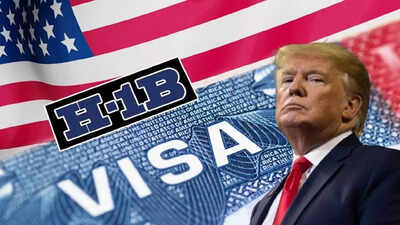
A bipartisan bill introduced The United States House of Representatives on Tuesday sought to remove a major cost barrier by waiving the $100,000 H-1B visa application fee for foreign health care professionals.
What is proposed in the bill?
A bipartisan group of lawmakers has introduced legislation to waive the $100,000 application fee for H-1B visas for foreign health care workers, including doctors and nurses. The H-1B visa is a nonimmigrant visa that allows US employers to hire foreign workers in specialized occupations.This fee was introduced in September last year under the Trump administration. It required employers to pay $100,000 for each new skilled international worker hired on an H-1B visa.The proposed bill aims to reduce the financial pressure on hospitals and health care systems that rely on international professionals.
Why did the fee raise concerns?
U.S. hospitals routinely hire foreign-trained doctors and nurses, especially before July 1, when new medical residents join. Many of these recruits are graduates of international medical schools.The $100,000 fee significantly increased recruiting costs for hospitals already managing staff shortages. Health care providers warned that such costs could reduce jobs, particularly in areas that rely heavily on international staff.Many internationally trained doctors serve in rural and underserved areas, as well as in areas such as primary care, where US-trained doctors are less interested.
Impact on vulnerable areas
The role of foreign medical graduates becomes more prominent in regions with limited access to health care. These areas often rely on international professionals to maintain basic medical services.“I live in Flint, Michigan, which is a very medically underserved place that really depends on international medical graduates,” said Dr. Bobby Mugla, president of the American Medical Association (AMA). The New York Times. “If it doesn’t get fixed, it leaves places like my hometown and other rural communities without enough doctors to care for this population.”“In many such communities, international medical graduates play a vital role in providing care and ensuring that patients can see a doctor when they need it,” he added. The NYTThe American Medical Association has urged Congress to act quickly on the bill.
Greater workforce pressure
The problem extends beyond immediate employment costs. According to the American Medical Association, the U.S. already faces a projected shortage of 86,000 doctors by 2036.Nursing shortages are also a concern. By 2022, there were approximately 500,000 immigrant nurses working in the country, approximately one in six registered nurses. Higher visa costs threaten to further strain an already stretched health care system.
A policy question
The H-1B visa program is not limited to healthcare. Industries like technology and finance also rely on it to fill talent. However, the health care sector presents a more immediate public service impact, where staff shortages directly affect patient care.The proposed waivers reflect a targeted response, focusing on a sector where labor shortages are already visible and growing.The bill was introduced by Reps. Mike Lawler, Sanford D. Bishop Jr., Maria Elvira Salazar and Yvette Clark. Its progress will depend on how quickly Congress moves to address concerns raised by health care organizations.For now, the proposal signals a potential shift in how immigration policy intersects with public health needs. The actual impact will depend on whether the legislative intent translates into timely relief for hospitals and the communities they serve.