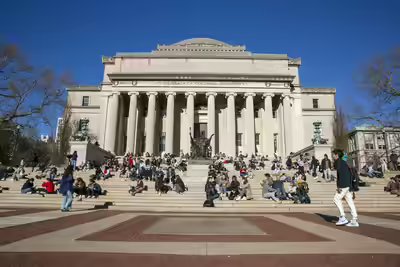
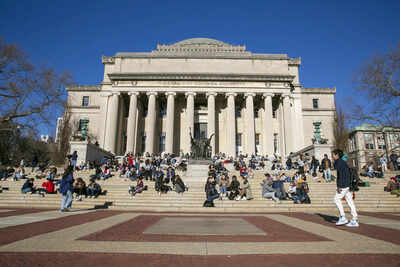
Columbia University reported one of its most selective admissions cycles yet, admitting just 4.2% of applicants to its class of 2030, highlighting the intensity of competition among top global institutions.As reported by Columbia SpectatorColumbia College and the School of Engineering and Applied Science (SEAS) admitted 2,581 students out of a record-breaking 61,031 applications — an increase of 1,415 applicants over last year. The acceptance rate has declined from 4.9% in 2025 to 4.23% this year, reflecting a tightening admissions landscape.Decisions for regular decision applicants were released Thursday evening, the culmination of a highly competitive period. In comparison, last year saw 59,616 applicants, with 2,557 initial offers, which later rose to 2,946 after entering the waitlist. Ultimately, 1,806 students enrolled, making it the largest incoming class in the university’s history.Interestingly, the early decision round saw a slight drop in interest with 5,497 applications, down 6.4 percent from last year’s 5,872 applicants. Nevertheless, the overall applicant pool increased, pointing to continued global demand for Columbia’s programs.The newly admitted cohort reflects strong international diversity, with students representing all 50 US states and 111 countries. About half of admitted students are expected to receive financial aid, highlighting the university’s continued emphasis on need-based aid.
Policy changes and federal oversight mark the era of new admissions.
The 2025-26 cycle is particularly important because it follows Colombia’s $221 million settlement with the Trump administration in July 2025. As part of the agreement, the university will now share detailed admissions data — including race, GPA, and standardized test scores — with federal officials. Additionally, international applicants are required to explain their motivation for studying in the United States, introducing a new layer to the application process.
Expansion plans spark debate across campus.
The Class of 2030 is also the first entering class under Columbia’s revised undergraduate expansion strategy. The university previously announced a phased increase in enrollment—adding 125, 200, and 250 students over three years—though it was rolled back after widespread criticism.After an increase of 300 students in the Class of 2029, the incoming Class of 2030 is expected to be about 175 students smaller, signaling a revival of growth plans.The extension proposal has faced stiff resistance from students and teachers. Both the Columbia College Student Council and the Engineering Student Council expressed concern over overcrowding and inadequate infrastructure in a December 2025 open letter.Opposition intensified in March, when more than 1,000 community members signed a petition demanding that any expansion be accompanied by investment in housing, food and educational resources. Shortly thereafter, the Faculty of Arts and Sciences passed a resolution opposing the plan, with 77 percent of participating faculty voting in favor.
Bernard intercepted the entry data again.
Meanwhile, Barnard College — the Columbia-affiliated women’s college — released its Class of 2030 decisions earlier this week but, for the second year in a row, did not disclose key admissions metrics such as acceptance rates. President Laura Rosenberry said the decision was not part of a deliberate strategy.