Most students learn coding, AI, or even basic communication tools without realizing that there was once a world where none of these had a formal mathematical foundation. Before Wi-Fi, before smartphones, even before digital computers as we know them—there was no clear way to measure information.“Then, in 1948, a 32-year-old Bell Labs researcher changed everything with a paper titled “A Mathematical Theory of Communication.” It was so dense that engineers found it too abstract and mathematicians thought it too applied. Even one reviewer dismissed it.Today, the same paper is considered the birth certificate of the digital age.The man behind it was Claude Shannon—now called the father of information theory.A 21-year-old idea that quietly built the digital world.Long before his famous 1948 paper, Shannon had made history without ever fully realizing it.At just 21 years old, while studying at MIT, he worked with early mechanical systems at the Massachusetts Institute of Technology. These machines use electrical switches that can only be in two states: on or off. Around the same time, Shannon took a philosophy course on Boolean algebra—where logic is also reduced to true and false.The connection was obvious only in hindsight—but at the time, no one had made it.His 1937 master’s thesis, A Symbolic Analysis of Relay and Switching Circuits, proved something revolutionary: Boolean logic could be physically modeled using electrical circuits. In other words, logical reasoning can become hardware.This insight is how every modern computer—from laptops to smartphones—works. As scholar Howard Gardner later called it, it may be “the most important master’s thesis of the century.”From secret codes to complete privacyDuring World War II, Shannon worked in cryptography at Bell Labs, helping to develop secure communications systems, including the technologies used to transmit classified voice messages between world leaders.His work in cryptography went far beyond the practical needs of wartime. In a later declassified memo, Shannon mathematically proved something extraordinary: perfect secrecy is possible.This result became the basis of modern cryptography. It influenced everything from the Data Encryption Standard (DES) to today’s Advanced Encryption Standard (AES). Simply put, it marked a shift from “breaking codes by skill” to “designing systems that are mathematically sound”.The birth of information theoryShannon’s 1948 paper didn’t just define communication—it defined it.He introduced a way to measure uncertainty using a formula now called Shannon entropy:H = −Σ p(x) log p(x)If the equation seems intimidating, don’t worry. The idea is simple: it measures how unpredictable the information is.This led to several powerful concepts:
- Bit: The smallest unit of information (0 or 1), later named by John Tukey.
- Channel capacity: Every communication system has a maximum speed limit for reliable transmission.
- A unified theory of communication that applies to telephones, radios, and computers alike.
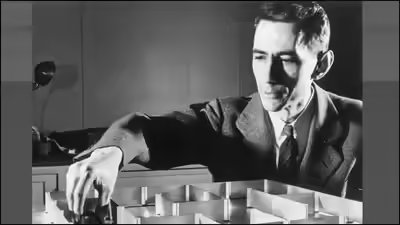
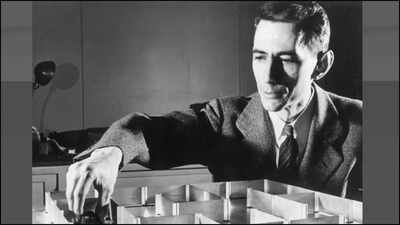
Engineer Robert Luckey once called it one of the greatest achievements in technological history.Even today, Shannon’s ideas are ubiquitous in AI. Cross-entropy loss, information gain in decision trees, and confusion in language models all appear from its original equations.When Machines Began to Learn: This MouseShannon wasn’t just a theorist—he loved building things that worked.In 1950, he created a mechanical learning device called Thesis at the Massachusetts Institute of Technology. It was a little mouse that navigated the maze using trial and error. Once he has learned a path, he can remember it and solve the maze faster the next time.As the maze changed, it adapted.It is widely considered one of the earliest demonstrations of machine learning.He also wrote early ideas about programming computers to play chess and helped organize the famous Dartmouth workshop, often cited as the official starting point of artificial intelligence as a field.Lively geniusShannon wasn’t just a serious scholar—he had a famously playful side.At Bell Labs, he would cycle through the hallways while performing magic. He created instruments such as flame-throwing trumpets and even a rocket-propelled Frisbee. He called his house the “Entropy House”, a nod to his favorite scientific concept.Despite his genius, he often said that his motivation was simple curiosity, not fame or money. He once explained that he just wanted to understand how things worked.A legacy within the screen you touchShannon’s influence didn’t stay in textbooks—it became the backbone of the digital world.From Internet data transmission to mobile networks, from encryption to AI systems, his ideas quietly power almost everything students use today.Modern researchers such as Rodney Brooks have even stated that Shannon contributed more to 21st century technology than anyone else in the 20th century.He spent his later years at MIT, continuing research until 1978, before dying in 2001 after living with Alzheimer’s disease, a tragic irony for someone who defined how to measure information itself.Why Students Should CareClaude Shannon’s story is not just about math or engineering. It’s about how one idea—when deeply understood—can reshape the entire world.He didn’t just invent theories. It gave us language to describe information.And every time you send a message, play a video, or train an AI model, you’re silently using its ideas.