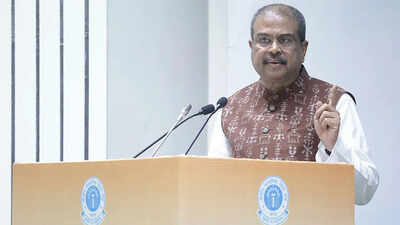
New Delhi: Union Education Minister Dharmendra Pradhan launched the Computational Thinking and Artificial Intelligence (CT & AI) syllabus for classes III to VIII under the Central Board of Secondary Education (CBSE) on April 1, on the first day of the academic session 2026-27. The launch took place at Vigyan Bhavan in New Delhi in the presence of senior government officials and education stakeholders.The curriculum, developed in collaboration with the National Council of Educational Research and Training (NCERT), formally brings structured AI education to the CBSE school system. Pradhan described it as “a transformative step towards future-ready learning”, adding that the initiative “formally introduces structured AI learning into the school ecosystem at scale.”
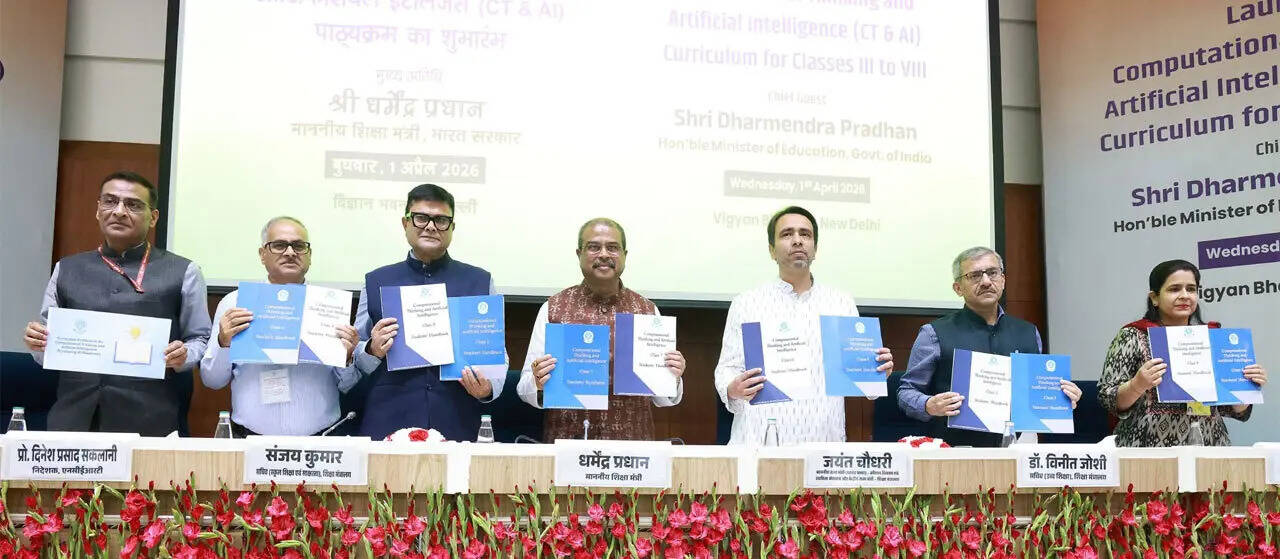
Union Education Minister Dharmendra Pradhan poses with Shri Jayant Chaudhary, Sanjay Kumar IAS, Dr. Vineet Joshi IAS, Rahul Singh IAS, Dr. Dinesh Prasad Suklani, and Ms. Prachi Pandey while presenting the CBSE ECT and AI syllabus at Vigyan Bhavan in New Delhi.
A curriculum designed for the classroomThe CT and AI curriculum is equipped with structured learning modules, a comprehensive teacher handbook, and a robust student assessment framework. Pradhan noted that the initiative “ensures early and systematic exposure to emerging technologies laying a strong foundation for tomorrow’s learners.” These resources are designed to give both students and teachers a clear, practical path into AI and computational thinking from Class III.Minister of State for Education Jayant Chaudhary launched the syllabus along with Pradhan. Sanjay Kumar IAS, Secretary, Department of School Education and Literacy was also present on the occasion. Dr Vineet Joshi IAS, Secretary, Higher Education Department; Rahul Singh IAS, Chairperson, CBSE; Dr. Dinesh Prasad Saklani, Director, NCERT; and Ms. Prachi Pandey, Joint Secretary (Institutions and Training), Department of School Education and Literacy.
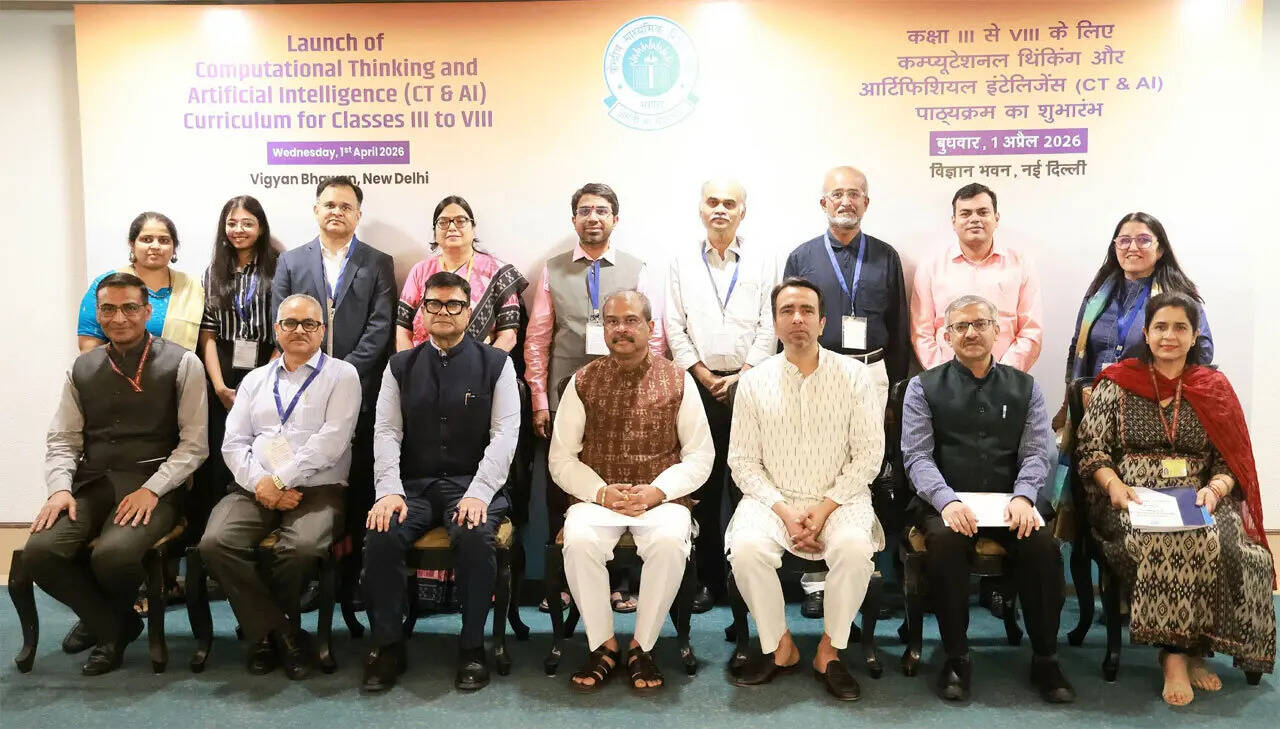
Union Education Minister Dharmendra Pradhan posing with the CBSECT and AI curriculum development team and dignitaries including Shri Jayant Chaudhary, Sanjay Kumar IAS, Dr. Vineet Joshi IAS, Rahul Singh IAS, Dr. Dinesh Prasad Saklani, and Ms. Prachi Pandey at Vigyan Bhawan, New Delhi. Syllabus of Class III to VIII.
AI for education and AI in educationPradhan outlined two guiding strategies behind the initiative — “AI for Education” and “AI in Education” — as a push toward what he calls “augmented learning.” In his words, the curriculum “signals a decisive shift towards augmented learning – nurturing critical thinking, design orientation and a culture of innovation in young minds”.Citing the Stanford AI Knowledge Index, he noted that India currently has the third largest AI-capable population in the world. “If we look at the Stanford AI Knowledge Index today, India has the third largest population of AI-capable people in the world. This has been possible because India’s academia and academia have taken AI as their agenda. Today, we have worked to bring it into a formal structure,” he said.
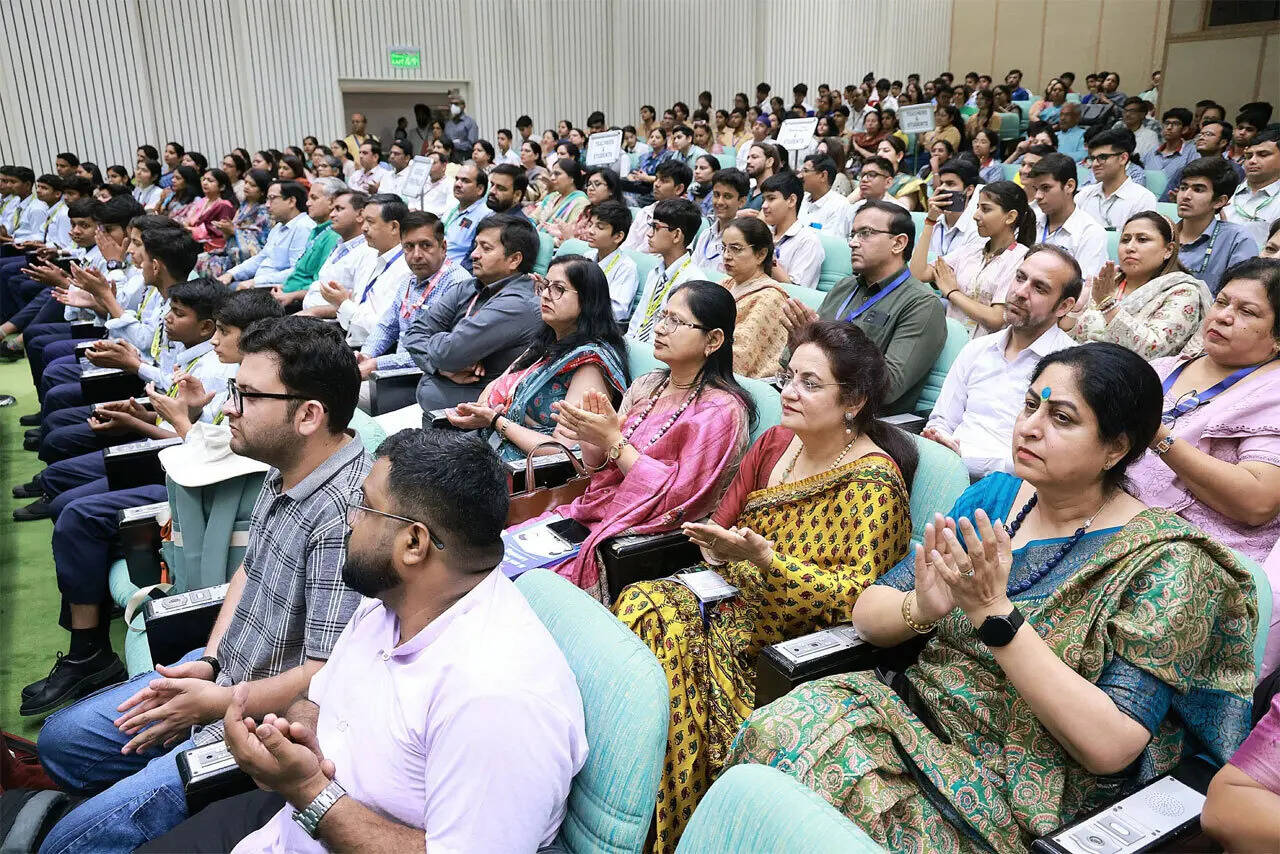
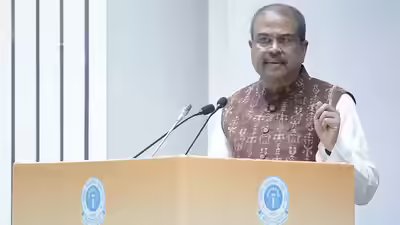
Union Education Minister Dharmendra Pradhan addresses the audience during the launch of CBSE CT and AI syllabus at Vigyan Bhawan in New Delhi as students, teachers and education stakeholders listen attentively.
Appreciated by CBSE and NCERT.Pradhan also spoke about India’s growing global standing in technology-based computing, saying the curriculum will “empower students to meaningfully engage with and shape the digital future.” He congratulated both CBSE and NCERT for “institutionalizing this futuristic framework and driving a more adaptive, technology-integrated educational ecosystem”. The release of the curriculum from the very first day of the school year indicates the government’s intention to treat AI literacy as a core part of school education rather than an optional add-on.