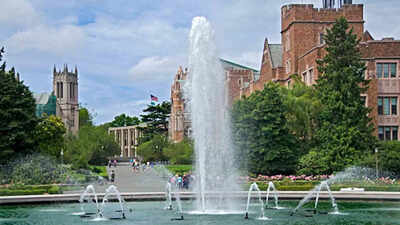
In recent weeks, at least three cases across the United States have brought renewed attention to the limits of academic expression, particularly around the Middle East.At the center of one such case is Arya Fani, an associate professor at the University of Washington. He was removed as director of the Middle East Center after comments he made in a newsletter circulated through the center’s mailing list.According to the Seattle Times, Fani wrote in March that the Israeli actions suggested an intention beyond targeting the leadership and called into question claims about Iran’s nuclear ambitions. He had earlier also made remarks in a student newspaper referring to civilian casualties in the region.The university confirmed the administrative change. In a statement, it said Fani “remains an associate professor” but declined to discuss the reasons, citing confidentiality. The statement added that hiring decisions are based on institutional expectations. Daniel Hoffman, head of the Jackson School of International Studies, has assumed administrative duties.
Lawsuit in Texas
In a separate case, philosophy professor Idris Robinson has filed a lawsuit against Texas State University, alleging the university violated his constitutional rights.The dispute followed an off-campus discussion on the Israeli-Palestinian conflict, during which a physical altercation ensued. Online groups took time to connect Robinson with the university, reports said. Once identified, he became the focus of a campaign calling for his removal.Robinson argues that the action against him was motivated by external pressure rather than institutional action.
Termination at the University of Arkansas
Another case involves Shereen Saeedi, former head of the Center for Middle East Studies at the University of Arkansas.According to the Arkansas Times, Saeedi was fired after a series of incidents that included a warning letter, suspension and subsequent termination. Concerns about the university’s use of letterhead in social media statements and advocacy have been linked to an Iranian official.His dismissal continued despite the faculty committee’s recommendation to retain him.The Middle East Studies Association criticized the decision, calling for its reinstatement and urging the university to avoid actions that could “chill or censor” academic speech.
A pattern emerges.
These cases appear to be part of a wider trend. Universities across the US have taken action against pro-Palestinian speech since the events of October 7, 2023. According to The Guardian, this trend has intensified in recent months.Advocacy groups say the impact has been uneven. Arab and Muslim students and faculty members report high levels of scrutiny.At Harvard University, affiliates have filed more than 500 complaints alleging discrimination, according to reports cited in the coverage. These complaints include claims of canceled academic events and lack of management response.
Legal pressure and growing complaints
Statutory organizations tracking these developments point to a sharp increase in faculty receiving support.Chloe Truong-Jones, a lawyer at Palestine Legal, told The Guardian that requests for legal aid from faculty rose from 37 in 2022 to 150 last year. The increase reflects what he described as a growing number of disciplinary actions linked to speech on Palestine.
Where the line is drawn.
Universities have long balanced two competing expectations: protecting academic freedom while maintaining institutional quality. Recent cases suggest that this balance is under tension.Actions taken have not followed a single pattern. Some involve administrative removal, others contract termination, and some are now going to court.What connects them is the subject and its response.Currently, these are individual decisions made by separate institutions. But taken together, they point to a question no longer confined to one campus.How far can academic speech go before it begins to have institutional consequences? The answer is still being developed, not only in university offices but also in courtrooms, faculty bodies, and public debate.